Custom hats, shirts, and more – Order online today!

Underground Shirts vs Print Renegades: 2026 Comparison
Underground shirts vs print renegades: Compare Underground Shirts and Print Renegades for custom apparel printing. See pros, cons, and which fits your.
Table of Contents
- Underground Shirts vs Print Renegades: Head-to-Head Overview
- Comparison Table: Key Features and Services
- Screen Printing vs DTG for Business Branding
- Print Quality, Durability, and Wash Fastness
- Underground Shirts Alternative for Corporate Uniforms
- How to Choose a Screen Printing Company for Your Needs
- Turnaround Times, Bulk Order Scalability, and Cost Per Unit
- Which Provider Should You Choose?
Last Updated: August 19, 2026
Underground Shirts vs Print Renegades: Head-to-Head Overview
When sourcing custom apparel, your printing partner matters as much as the design itself. Underground Shirts and Print Renegades represent two distinct approaches to custom garment production, each with different strengths depending on your volume, timeline, and design complexity. This comparison breaks down where each excels so you can make an informed decision without wasting time on the wrong vendor.
Both providers serve the custom apparel market but have built their reputations on different foundations. Understanding those differences, from core printing techniques to scalability for bulk orders, is essential before committing. What works perfectly for one business might create friction for another, and a vendor that handles your first order beautifully might struggle when you scale to 500 units.
At Action Designs, we work with businesses across every size and complexity level. We’ve seen firsthand what separates a smooth, professional printing experience from one that leaves you frustrated with quality issues or missed deadlines. This guide walks you through the critical factors that should drive your decision.
Comparison Table: Key Features and Services
| Feature | Underground Shirts | Print Renegades | Action Designs |
|---|---|---|---|
| Primary Printing Methods | Screen printing, DTG | Screen printing, embroidery | Screen printing, DTG, embroidery, DTF |
| Minimum Order Quantity | Typically 12-24 units | Typically 6-12 units | Flexible, single shirts to bulk |
| Bulk Order Scalability | Good for mid-range volumes | Best for small runs | Optimized for any volume |
| Design Complexity Support | Moderate (limited colors) | High (detailed designs) | High (advanced techniques) |
| Garment Supply | Limited selection | Client-provided or limited | Full supply + client-provided items |
| Turnaround Typical | 7-10 business days | 5-7 business days | Flexible, scalable timelines |
| Best For | Consistent bulk orders | Small batches, detail work | Versatile needs, any size |
Screen Printing vs DTG for Business Branding
The choice between screen printing and direct-to-garment technology shapes your final product’s cost per unit, color vibrancy, design complexity, and durability. For business branding, this decision determines whether your uniforms look professional and last through dozens of washes.
Screen printing uses plastisol ink applied through a mesh screen, creating a durable, vibrant print that bonds directly to fabric. For logos with 2-4 colors, screen printing delivers superior wash fastness and color saturation. Setup involves creating separate screens for each color, meaning higher initial costs but dramatically lower per-unit pricing at volume. A 200-unit order costs significantly less per unit than the same order via DTG.
The limitation: screen printing struggles with photorealistic images or gradients. Designs with more than 6-8 colors require simplification or higher costs. Underground Shirts handles straightforward logo work well, but pushing color complexity hits their limitations quickly.
DTG printing works like an industrial inkjet, spraying water-based inks directly onto garments. It allows unlimited colors and photorealistic detail in a single pass with no setup time or minimum order quantity. A single custom shirt with a complex gradient costs the same per unit as 500 units, making DTG ideal for intricate designs and small batches.
The trade-off is durability. DTG prints require pre-treatment and proper curing, with ink sitting on top rather than bonding into the garment like screen printing. With correct care, DTG prints last for years, but they’re more susceptible to cracking with hot water washing or high-heat drying. For corporate uniforms with heavy use, screen printing remains safer.
Print Renegades emphasizes DTG, positioning them well for design-intensive small orders but less ideal for bulk corporate uniforms. Action Designs offers both techniques, letting you choose based on actual requirements.
Pro Tip
For logos with 2-4 colors and orders over 100 units, screen printing delivers better value and durability. For photorealistic designs or orders under 50 units, DTG is faster and more cost-effective.
For logos with 2-4 colors and orders over 100 units, screen printing delivers better value and durability. For photorealistic designs or orders under 50 units, DTG is faster and more cost-effective.
Print Quality, Durability, and Wash Fastness
Print quality separates vendors who treat custom apparel as a commodity from those who treat it as a craft. The difference shows after your team has worn and washed those shirts 20, 30, 50 times.
Wash fastness, how well a print resists fading, cracking, or peeling through repeated laundering, depends on ink quality, curing process, and fabric preparation. Underground Shirts uses standard plastisol inks for screen printing, which are industry-standard and reliable when cured properly. Print Renegades relies on DTG ink quality and pre-treatment protocols. Both are adequate for typical business use, but "adequate" isn’t "excellent."
The real differentiator is attention to detail in curing and quality control. A vendor that skips proper heat curing produces prints that look perfect initially but fail within 10 washes. A vendor that doesn’t inspect every piece for color consistency delivers inconsistent results. You won’t know which vendor does this until after ordering.
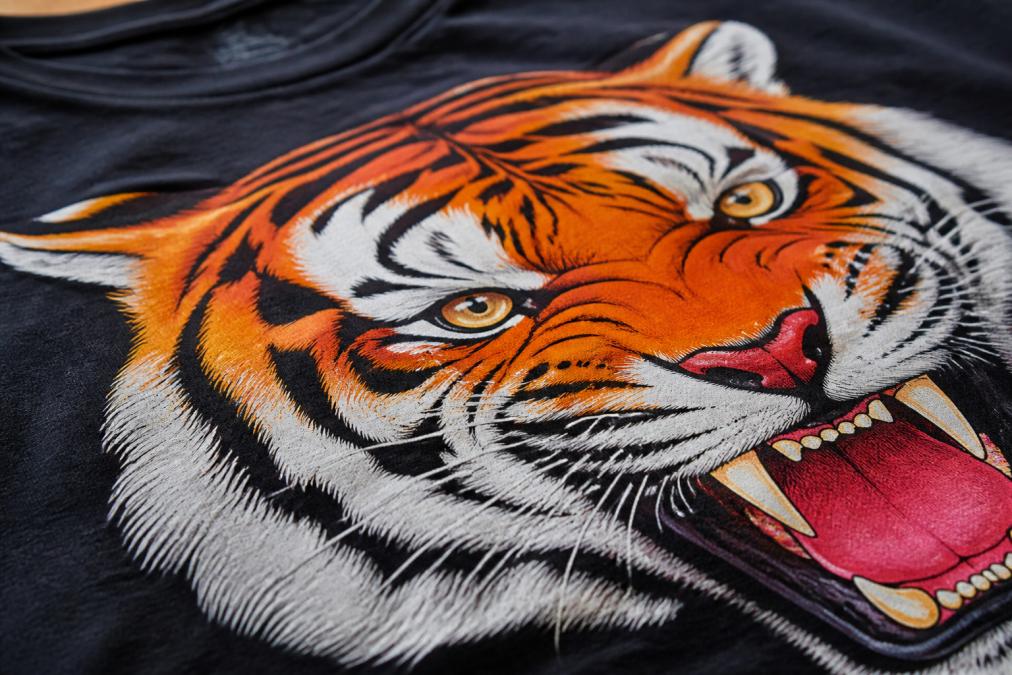
Action Designs prioritizes print quality control across all methods, screen printing, DTG, embroidery, and DTF. Every piece is inspected before shipment, which matters especially for corporate uniforms where fading logos reflect poorly on your organization.
When evaluating durability claims, ask specifics: What ink formulations do they use? What’s their curing process? Do they test prints through multiple wash cycles? Vendors giving vague answers are cutting corners. The best vendors provide test results or case studies demonstrating print longevity.
Watch Out
A print that looks perfect in the sample can fail after 15-20 washes if the vendor skips proper curing. Always request samples of previously completed work in similar fabric types before committing to large orders.
A print that looks perfect in the sample can fail after 15-20 washes if the vendor skips proper curing. Always request samples of previously completed work in similar fabric types before committing to large orders.
Underground Shirts Alternative for Corporate Uniforms
If you’ve been using Underground Shirts for corporate uniforms but experiencing issues, inconsistent quality, slow turnaround, minimum order frustrations, or limited design flexibility, you need to understand what alternatives actually solve those problems.
Underground Shirts works well for straightforward, high-volume orders of the same design with limited colors. Their screen printing is solid for logos, and pricing scales favorably at 200+ units. But they have real constraints: minimum order quantities excluding small teams, limited garment selection, and design processes that don’t accommodate complex artwork.
The alternative depends on your specific pain point. If it’s minimum order quantities, you need a vendor supporting single-shirt customization or low minimums. If it’s design complexity, you need DTG or embroidery capability. If it’s turnaround time, you need faster production cycles. If it’s color matching accuracy, you need rigorous quality control.
Action Designs addresses all these constraints. You can order single custom shirts or scale to full collections. You can supply your garments or use ours. You can use screen printing for bulk logo work or DTG for complex designs. You can get faster turnaround without sacrificing quality. The flexibility means you’re not forced into a one-size-fits-all approach.
Many businesses stay with underperforming vendors simply because switching feels like friction. The real friction comes from working with the wrong vendor too long. If Underground Shirts isn’t delivering on quality, speed, or design flexibility, the cost of switching is almost always lower than continuing to compromise on brand presentation.
How to Choose a Screen Printing Company for Your Needs
Selecting a screen printing company requires evaluating far more than price per unit. The wrong choice creates hidden costs: wasted design time, delayed campaigns, quality issues requiring reorders, and brand reputation damage.
Start with your actual requirements. How many units do you need? Is this one-time or ongoing? How complex is your design? What’s your timeline? What fabric types matter? The answers eliminate vendors immediately. If you need 50 shirts in 5 days, a vendor with 2-week turnaround is disqualified. If you need photorealistic printing, a screen-printing-only vendor is disqualified.
Evaluate technical capabilities honestly. Ask directly: Can you handle this design? What’s the color count? What’s the per-unit cost at my volume? What’s the actual turnaround? Vendors giving confident answers have done this before. Vendors hedging are either inexperienced or hiding constraints.
Quality control is non-negotiable. Request samples of previous work in similar fabrics and designs. Ask about curing process, ink formulations, and inspection protocols. Vendors that won’t discuss these details are cutting corners. The best vendors provide case studies or testimonials addressing durability and wash fastness.
Design collaboration matters more than most realize. A vendor requiring perfectly formatted files with no guidance wastes your time on revisions. A vendor reviewing your files, catching issues, and suggesting improvements saves hours. This is where professional printing companies differentiate from print-on-demand shops.
Pricing should be transparent and itemized: setup fees, per-unit costs, color charges, rush fees. If a vendor quotes without breaking down components, you can’t compare fairly or plan future orders.
Finally, consider scalability. Will this vendor handle your growth? If you start with 100 units and eventually need 1,000, can they scale without changing quality or dramatically increasing per-unit costs?
Turnaround Times, Bulk Order Scalability, and Cost Per Unit
Turnaround time and cost per unit are often presented as a trade-off, but this is where vendors separate themselves through operational efficiency.
Typical screen printing turnaround is 7-10 business days for standard orders, including design approval, screen setup, production, quality control, and packaging. Underground Shirts operates in this range. Print Renegades, with DTG focus, moves faster at 5-7 days because there’s no screen setup. Action Designs accommodates both timelines depending on technique and volume.
Clarify what "turnaround" means: Does it include design revision time? When does it start, order submission or design approval? Does it include shipping? A vendor promising 5 days but requiring 3 days for design approval and 2 days for shipping isn’t faster than one promising 7 days with included design and shipping.
For bulk orders, cost per unit drops significantly as volume increases, but the rate varies by vendor and technique. Screen printing shows dramatic per-unit savings at volume, a 500-unit order might cost 40-50% less per unit than a 100-unit order. DTG shows minimal per-unit savings because there’s no setup cost to amortize. This is why screen printing dominates for large corporate uniform orders and DTG dominates for small, personalized batches.
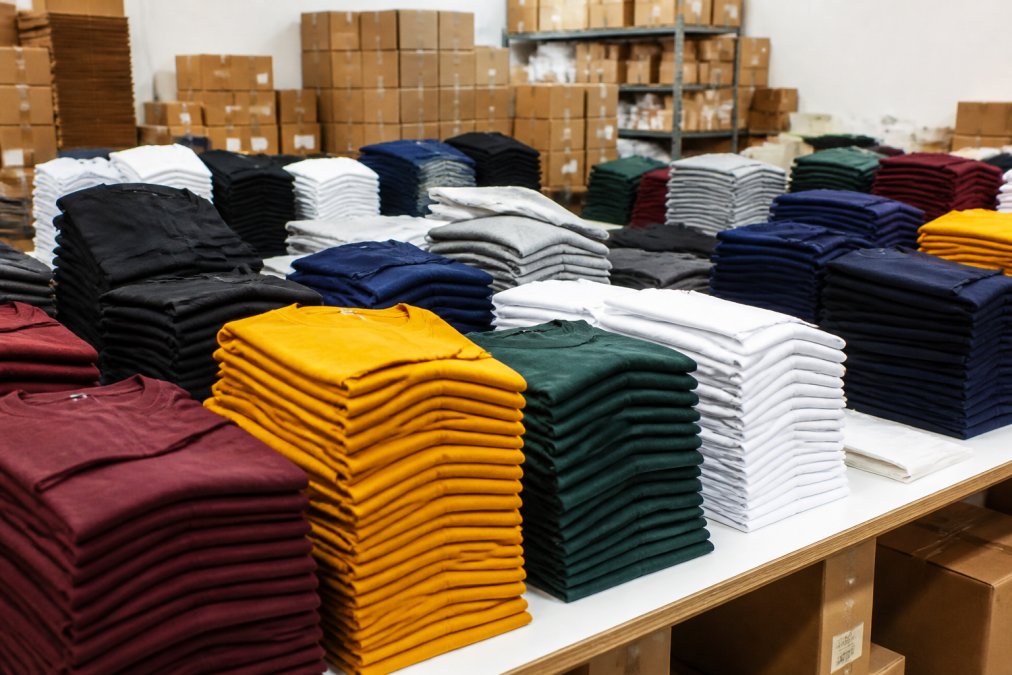
Scalability depends on whether a vendor has production capacity to handle your volume without sacrificing quality or timeline. A shop perfect for 100-unit orders might struggle with 1,000-unit orders. Equipment might max out, forcing subcontracting and introducing quality risks. The best vendors are transparent about capacity limits.
Action Designs scales across all order sizes without compromising quality. Whether ordering a single custom shirt or a full collection for 500 employees, production adapts to your volume. This flexibility means you’re not overpaying for unused capacity on small orders and not struggling to find a vendor for growth on large orders.
Key Takeaway
For bulk orders over 200 units, screen printing delivers the lowest per-unit cost and best durability. For orders under 50 units, DTG eliminates setup costs and offers unlimited design complexity. For orders between 50-200 units, compare both methods, the break-even point varies by vendor.
For bulk orders over 200 units, screen printing delivers the lowest per-unit cost and best durability. For orders under 50 units, DTG eliminates setup costs and offers unlimited design complexity. For orders between 50-200 units, compare both methods, the break-even point varies by vendor.
Which Provider Should You Choose?
The direct comparison reveals a fundamental difference in philosophy. Underground Shirts optimizes for high-volume, straightforward orders with screen printing. Print Renegades optimizes for small-batch, design-intensive work with DTG. Neither is universally better; they’re built for different use cases.
Choose Underground Shirts if you have consistent, large-volume orders of the same design with limited colors and prioritize per-unit cost savings. They handle this scenario well, and their screen printing quality is reliable for corporate uniforms and promotional merchandise.
Choose Print Renegades if you need small-batch orders, photorealistic designs, or rapid turnaround times. Their DTG capability and lower minimums make them ideal for personalized merchandise and design-forward campaigns.
However, neither vendor alone covers all needs. You’ll eventually face an order that doesn’t fit their sweet spot, a mid-volume job too big for DTG pricing but too small to justify screen printing setup, or a design too complex for Underground Shirts’ color limitations.
Action Designs changes this equation. With screen printing, DTG, embroidery, and DTF capabilities, you’re not locked into one technique or philosophy. You choose the method that fits your requirements, not the method your vendor specializes in. You can order single custom shirts or scale to full collections. You can supply your garments or use ours. You can get professional branding for logos and uniforms, cost-effective solutions for promotional merchandise, and flexible customization tailored to your actual needs.
The vendors you choose should adapt to your business, not force your business to adapt to their constraints. If Underground Shirts or Print Renegades work for your current needs, that’s fine. But as needs evolve, different order sizes, new design requirements, faster timelines, you’ll eventually outgrow their single-method approach.
The right custom apparel partner isn’t about picking the lowest price or fastest turnaround. It’s about finding a vendor that understands your specific requirements and delivers consistently. Action Designs specializes in versatile printing techniques including screen printing, embroidery, DTG, and DTF, with flexibility to supply garments or customize client-provided items. Whether outfitting your entire team with professional uniforms, creating bold promotional merchandise, or launching a design-forward brand, get a quote from Action Designs and see how scalable production and multiple printing methods solve your constraints.
Frequently Asked Questions
What are the key differences between Underground Shirts and Print Renegades?
Underground Shirts and Print Renegades differ in printing techniques, turnaround times, minimum order quantities, and specialty services. Underground Shirts focuses heavily on screen printing for bulk orders, while Print Renegades offers more versatility with DTG and embroidery options. Your choice depends on your design complexity, order volume, and timeline. Request quotes from both to compare pricing and services for your specific project.
Which printing method, screen printing or DTG, works better for business branding?
Screen printing excels for bulk corporate orders with simple logos and solid colors, offering superior durability and lower per-unit costs at scale. DTG (direct-to-garment) suits complex designs, gradients, and smaller batches without setup fees. For corporate uniforms with multiple color logos, screen printing typically provides better wash fastness and longevity. For intricate brand artwork or limited quantities, DTG delivers vibrant detail without minimum order requirements.
How do I know if a screen printing company will deliver quality that actually lasts?
Request samples or case studies showing print durability after multiple washes. Ask about their ink type (plastisol vs water-based), curing process, and pre-treatment methods, these directly impact wash fastness. Verify they conduct quality control testing. Check customer reviews specifically mentioning longevity and color retention. Ask how they handle color matching for samples versus bulk production to avoid surprises with final shipments.
Is Underground Shirts a good alternative for small business corporate uniforms?
Underground Shirts works well for businesses needing bulk uniform orders with simple, consistent designs. However, if you have fewer than 50 employees or need design flexibility, alternatives like Print Renegades may offer better scalability for smaller quantities without high minimum order requirements. Compare minimum order quantities, setup fees, and customization options against your actual team size and design complexity before committing.
What file preparation requirements should I expect from custom apparel providers?
Most providers require vector graphics (AI, EPS, PDF) for screen printing to ensure clean color separation and spot colors. DTG typically accepts raster images (JPG, PNG) at 300 DPI or higher for quality results. Ask your chosen provider about file specifications, color modes (CMYK vs RGB), and whether they offer design assistance. Proper file preparation prevents delays, reprinting costs, and quality issues on final garments.
This article was written using GrandRanker