Custom hats, shirts, and more – Order online today!

Durable Custom Shirts for Daily Wear: A Buyer’s Guide
Learn what makes custom shirts last. Compare fabric types, print methods, and construction techniques to find durable custom shirts for daily wear.
Table of Contents
- What Makes Durable Custom Shirts Stand Out
- Fabric GSM Meaning for T-Shirts and Why It Matters
- Cotton vs. Performance Blends: Which Lasts Longer
- Screen Printing vs. Direct to Garment Durability
- How to Wash Custom Printed Shirts to Extend Their Life
- Construction Details That Define Durability
- Choosing the Right Durable Custom Shirt for Your Needs
- Conclusion
Last Updated: August 11, 2026
What Makes Durable Custom Shirts Stand Out
When you order custom apparel, durability matters more than most people realize. A shirt that looks great on day one but fades, cracks, or tears within weeks defeats the entire purpose of customization. The difference between a shirt that lasts a year and one that lasts five years comes down to three core factors: fabric quality, printing technique, and construction methods.
Durability in durable custom shirts isn’t accidental. It results from deliberate choices about fiber content, fabric weight, how the garment is constructed, and which printing method preserves color and integrity through repeated washing. A well-made custom shirt maintains its appearance and structural integrity through hundreds of wash cycles. A poorly made one starts degrading after the first handful of wears.
The stakes are higher when you’re ordering for a team, event, or brand. A single low-quality shirt reflects poorly on your organization. A hundred of them becomes a costly mistake. This guide breaks down exactly what separates shirts built to last from those that don’t.
Fabric GSM Meaning for T-Shirts and Why It Matters
GSM stands for grams per square meter, and it’s the single most reliable indicator of fabric weight and durability. A higher GSM number means thicker, denser fabric that resists pilling, tearing, and general wear.
Think of GSM as a standardized way to measure how much fiber is packed into the fabric. A lightweight t-shirt might be 150 GSM. A standard everyday shirt runs 180-200 GSM. Premium, heavy-duty shirts reach 230 GSM or higher. The difference between 150 GSM and 230 GSM is immediately noticeable when you hold the fabric, one feels paper-thin, the other feels substantial.
Why does this matter for durability? Thicker fabric provides more protection against friction damage. When a shirt gets washed repeatedly, thinner fabric breaks down faster. The fibers have less density to withstand the mechanical stress of tumbling, agitation, and friction against other garments. A 200 GSM shirt will outlast a 150 GSM shirt by years when subjected to identical washing conditions.
For daily wear, aim for at least 180 GSM. If your shirts will be worn frequently or washed in commercial laundry settings, 200 GSM or higher is worth the investment. Athletic or performance-oriented custom shirts often use 220+ GSM because they’re designed for high-stress environments.
The relationship between GSM and durability isn’t linear, a 220 GSM shirt doesn’t last exactly 47% longer than a 150 GSM shirt. But the difference is substantial and measurable. Heavier fabric simply has more material to degrade before the shirt becomes unwearable.
Cotton vs. Performance Blends: Which Lasts Longer
The fiber content of your custom shirt determines how it responds to washing, UV exposure, sweat, and general wear. Pure ring-spun cotton and performance blends each have distinct durability profiles.
Ring-spun cotton is the gold standard for natural fiber durability. The ring-spinning process creates stronger, longer fibers that resist pilling and maintain softness through repeated washing. A high-quality ring-spun cotton shirt can last for years if cared for properly. The downside: cotton shrinks, fades with sun exposure, and absorbs moisture rather than wicking it away.
Performance blends, typically cotton mixed with polyester or other synthetics, offer different advantages. Polyester fibers are inherently more fade-resistant and don’t shrink the way pure cotton does. A 50/50 cotton-polyester blend or 60/40 blend maintains its shape and color better through dozens of wash cycles. Performance fabrics also provide moisture-wicking properties, making them ideal for athletic wear or uniforms in warm environments.
The durability trade-off is real. Pure cotton ages gracefully, it softens and becomes more comfortable over time, but the color gradually fades. Performance blends maintain their appearance longer but may feel slightly less soft initially. For printed designs, performance blends are often superior because the polyester resists the cracking and peeling that can affect cotton prints over time.
For daily wear in professional settings, a 60/40 cotton-polyester blend offers the best balance. You get the comfort and breathability of cotton with the color retention and shrinkage resistance of polyester. For premium casual wear where longevity is the priority, ring-spun 100% cotton is unbeatable, just expect some shrinkage and fading.
Screen Printing vs. Direct to Garment Durability
The printing method you choose dramatically affects how long your design stays vibrant and intact. Screen printing and direct-to-garment (DTG) printing have very different durability profiles.
Screen printing forces ink into the fabric fibers through a mesh screen. The ink sits on top of and within the fabric, creating a bond that’s extremely durable. A properly executed screen print can withstand hundreds of wash cycles without cracking, fading, or peeling. The ink doesn’t sit on the surface like paint, it’s actually part of the fabric. This is why screen-printed shirts from decades ago still look sharp.
The limitation of screen printing is design complexity. Multi-color designs require separate screens for each color, which increases cost and setup time. Fine details can blur or become muddy because the ink spreads slightly during the printing process.
Direct-to-garment printing (DTG) works like an inkjet printer for fabric. The ink is sprayed directly onto the shirt, allowing for photorealistic detail and unlimited colors without additional setup. DTG is faster for small runs and handles intricate designs beautifully.
The durability question with DTG is real: the ink sits on the surface of the fabric rather than being forced into the fibers. With proper curing and high-quality inks, DTG prints can last for years. However, they’re more susceptible to cracking if the shirt is folded repeatedly or exposed to extreme friction. A DTG print on a shirt that gets worn daily and washed frequently may show wear faster than a screen print on the same garment.
For durable custom shirts designed for daily wear, screen printing remains the more reliable choice if your design allows for it. If your design requires photorealistic detail or unlimited colors, DTG is viable, just expect the print to show wear slightly sooner than a screen-printed equivalent. Action Designs specializes in both techniques and can recommend the best approach based on your specific design and durability requirements.
How to Wash Custom Printed Shirts to Extend Their Life
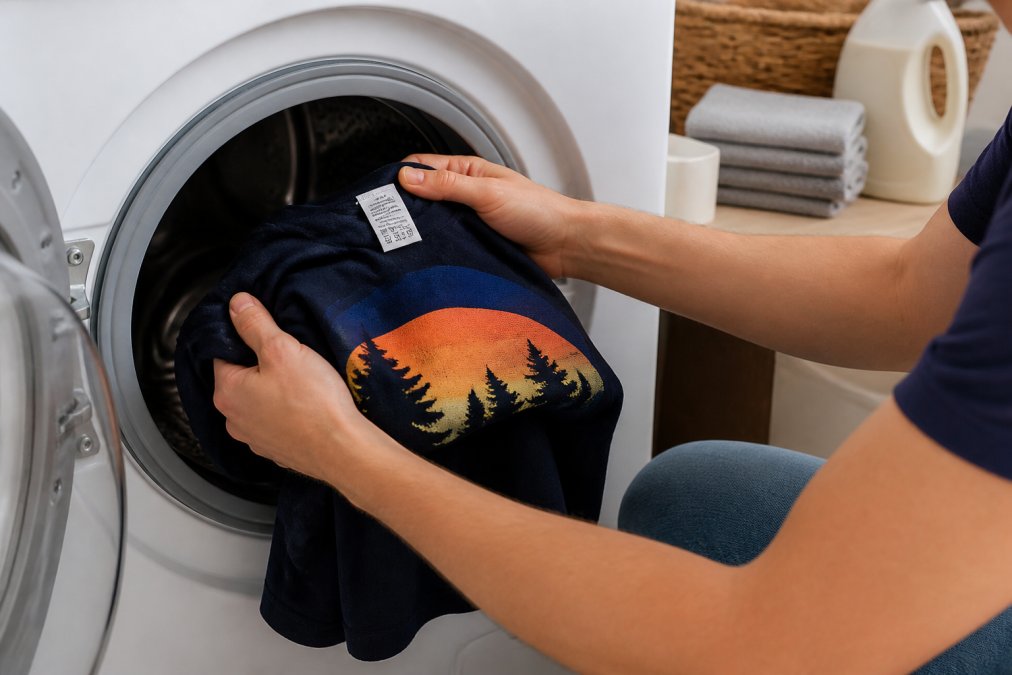
The way you wash custom printed shirts matters as much as how they’re made. Improper washing accelerates fading, causes cracking, and shortens the lifespan of your investment significantly.
Wash in cold water. Hot water breaks down dyes and weakens fabric fibers. Cold water cleans just as effectively for most garments and dramatically extends color retention. This applies to both the initial wash and every subsequent one.
Turn printed shirts inside out before washing. This simple step protects the design from direct friction with other garments and the washing machine drum. The print faces inward, away from the mechanical stress of the wash cycle. This single practice extends print longevity by years.
Use a gentle or delicate cycle. Heavy-duty wash cycles subject fabric to intense agitation. For custom shirts, especially those with prints, a gentler cycle reduces mechanical stress on both the fabric and the design. The shirt still gets clean, but the fibers and print experience less damage.
Wash with similar colors. Dye bleeding is rare with quality custom shirts, but it happens. Washing reds with whites or dark colors with lights creates unnecessary risk. Group similar colors together to minimize any potential color transfer.
Avoid fabric softeners and bleach. Fabric softener coats the fibers and can dull printed designs. Bleach damages both the fabric and the ink, especially on colored shirts. Regular detergent is sufficient and safer for durability.
Air dry when possible. High heat in the dryer weakens fibers and can cause prints to crack. Air drying is gentler and extends the life of the garment. If you must use a dryer, use a low-heat or air-only setting.
Limit washing frequency. The most durable custom shirt still degrades with each wash cycle. Wash only when necessary. Spot-clean minor stains rather than washing the entire shirt. This practice alone can double the lifespan of your custom apparel.
These practices apply regardless of whether your shirts are screen-printed or DTG. The principle is the same: minimize mechanical stress and heat exposure.
Construction Details That Define Durability
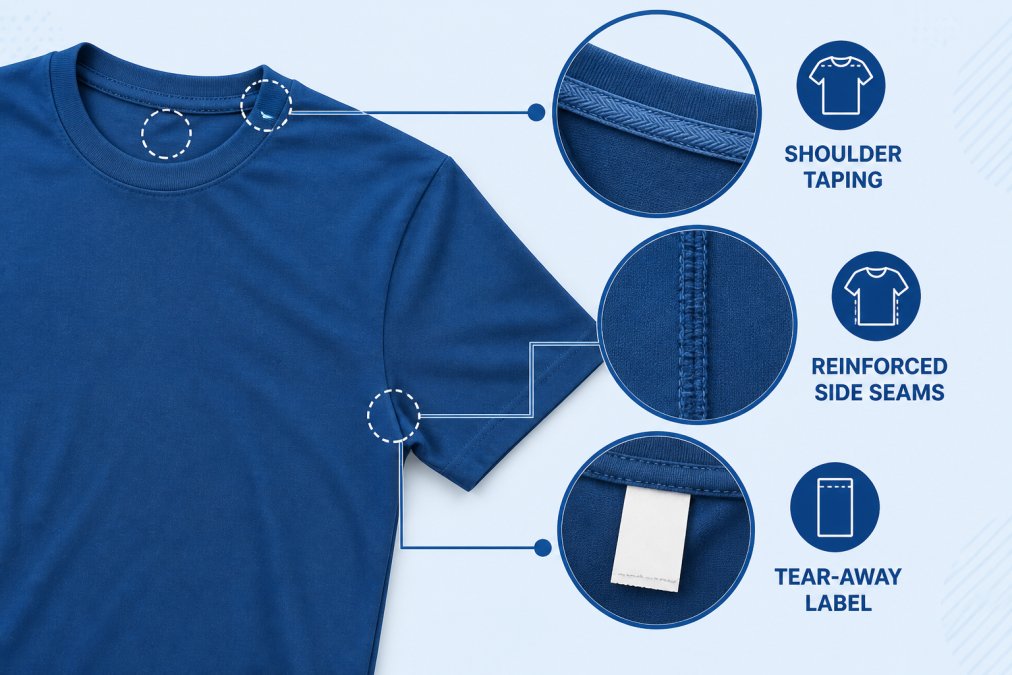
Beyond fabric and printing, how a shirt is physically constructed determines whether it holds together through years of wear or starts falling apart after a few months.
Shoulder-to-shoulder taping reinforces the seams where the sleeves meet the body. This extra layer of fabric is stitched along the seam, preventing stretching and tearing in one of the highest-stress areas of the shirt. Shirts without shoulder taping will develop holes or tears at the shoulder seams relatively quickly with regular wear.
Side-seamed construction means the front and back panels are sewn together along the sides rather than using a single continuous stitch down the middle. Side seams distribute stress more evenly and allow the shirt to move naturally with your body. Shirts made with single-stitched side seams are cheaper to produce but fail faster under stress.
Reinforced neck binding prevents the neckline from stretching out or tearing. Quality custom shirts use a double-stitched or reinforced binding that maintains its shape through hundreds of wears and washes. Cheap shirts use a single-stitched binding that stretches and deteriorates quickly.
Hem quality matters more than most people realize. A properly finished hem with double stitching prevents unraveling and maintains the shirt’s shape. Single-stitched hems start coming apart after a few dozen washes.
Seam strength is determined by both thread quality and stitch density. Quality custom shirts use polyester thread (which is stronger than cotton thread) and maintain a consistent stitch density of at least 12-14 stitches per inch. This creates seams that won’t split under stress or normal wear.
These construction details aren’t visible in product photos, which is why they’re easy to overlook. But they’re the difference between a shirt that lasts one season and one that lasts five. When you’re evaluating custom shirt providers, ask about their construction standards. Action Designs uses side-seamed construction, shoulder-to-shoulder taping, and reinforced binding on all durable custom shirts because these details are non-negotiable for longevity.
Choosing the Right Durable Custom Shirt for Your Needs
Selecting the right durable custom shirt depends on your specific use case. Different situations call for different priorities.
For corporate uniforms and daily professional wear: Choose a 200 GSM 60/40 cotton-polyester blend with side-seamed construction. This combination provides durability, professional appearance, and color retention through frequent washing in commercial or home settings. Screen printing is ideal if your logo is relatively simple; DTG works if you need photorealistic branding.
For promotional merchandise and one-time events: A 180 GSM ring-spun cotton shirt with screen printing is cost-effective and durable enough for occasional wear. These shirts look premium and feel great, but they’re not designed for daily heavy use.
For athletic or high-stress environments: A 220+ GSM performance blend with moisture-wicking properties is essential. These shirts need to withstand intense physical activity, frequent washing, and exposure to sweat. DTG printing works here because the performance fabric resists cracking better than standard cotton.
For small-batch custom orders (under 50 units): DTG printing is typically more cost-effective than screen printing because there’s no setup fee. The print durability is sufficient for most applications, especially if the shirts won’t be subjected to extreme friction or repeated folding.
For large-volume orders (100+ units): Screen printing becomes cost-effective and offers superior durability for the print. If your design allows for it, screen printing is the better choice for bulk orders that will be worn frequently.
The relationship between fabric choice, construction quality, printing method, and intended use determines whether your investment in durable custom shirts pays off. A premium shirt worn casually once a month will outlast a cheap shirt worn daily. But a cheap shirt worn casually will outlast a premium shirt abused through improper washing.
When you’re ready to order durable custom shirts, Action Designs can guide you through these decisions based on your specific needs, budget, and timeline. The team can recommend fabric weights, fiber blends, printing methods, and construction standards that match your use case. Whether you need a single shirt or a full collection, the approach is the same: start with durability requirements, then build the specification from there.
Durability in custom apparel isn’t luck, it’s the result of intentional choices about materials, construction, and care. When you understand what actually drives longevity, you can order with confidence instead of guessing. Action Designs specializes in helping organizations and individuals make those choices through high-quality screen printing, DTG, embroidery, and DTF customization with professional-grade durability built in. Whether you’re outfitting a team, creating promotional merchandise, or designing something personal, the same principles apply: choose the right fabric weight, select the appropriate printing method, and follow proper care instructions. Get a quote from Action Designs today and let the team help you build custom shirts designed to last.
Frequently Asked Questions
What print method produces the most durable custom shirts?
Screen printing and DTG (direct-to-garment) both offer excellent durability when executed properly. Screen printing creates a thicker ink layer that resists cracking through multiple wash cycles, while DTG produces fine-detail prints that maintain colorfastness with proper care. The best choice depends on your design complexity and desired finish. Action Designs specializes in both methods and can recommend the right technique based on your specific needs.
How do I know if a durable custom shirt will actually hold up to daily wear?
Look for heavyweight fabrics (typically 6 oz or higher GSM), ring-spun cotton construction, and pre-shrunk treatment. Check that the shirt uses tear-away labels, side seams, and shoulder-to-shoulder taping, these details indicate quality garment construction. Ask your vendor about their wash-testing standards and whether they can provide examples of how their prints hold up after 20+ wash cycles. Request samples before ordering in bulk.
What fabric weight is best for durable custom shirts worn every day?
For daily wear durability, aim for at least 5.3 oz GSM (grams per square meter), with 6 oz or heavier being ideal for maximum longevity. Heavyweight cotton resists pilling, maintains shape through repeated washing, and provides better print adhesion. Performance blends in the 5-6 oz range offer moisture-wicking benefits while maintaining durability. Consider your climate and use case, warmer environments may benefit from lighter fabrics that still meet durability standards.
How should I wash custom printed shirts to make them last longer?
Turn shirts inside-out before washing to protect the print surface. Use cold water and a gentle cycle, avoiding bleach and harsh detergents that fade colors and weaken fibers. Wash with similar colors to prevent color bleeding. Air-dry or tumble-dry on low heat, high heat can cause ink cracking and shrinkage. Avoid ironing directly over prints; if needed, iron on the reverse side. Following these steps significantly extends the life of durable custom shirts.
This article was written using GrandRanker