Custom hats, shirts, and more – Order online today!

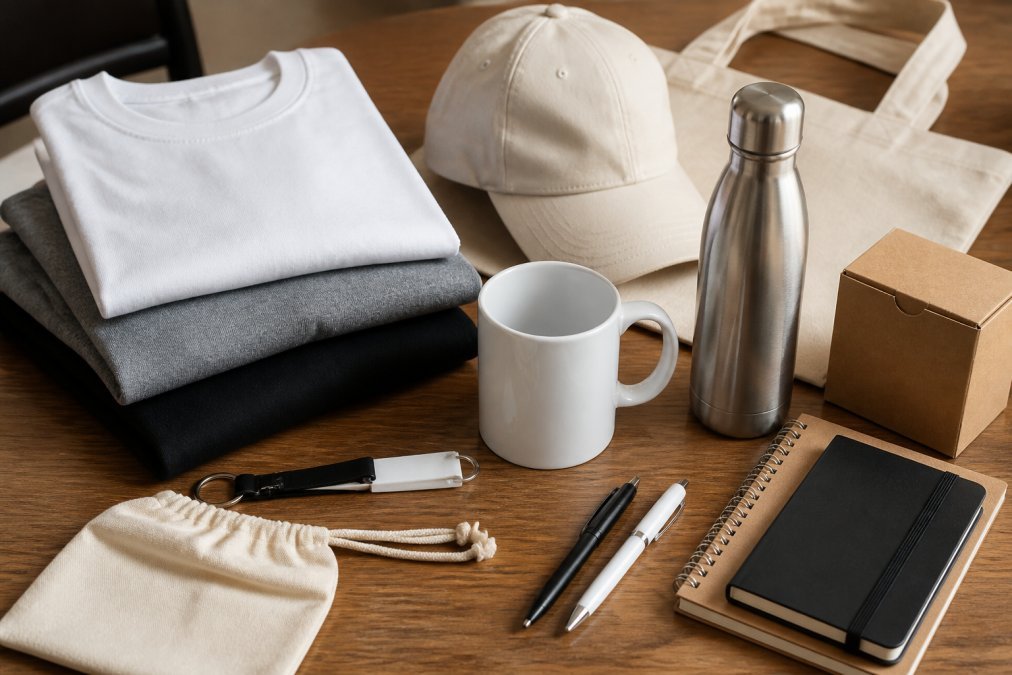
Order Custom Promotional Items Online: 2026 Guide
Learn how to order custom promotional items online with no minimums, fast turnaround, and trade show options. Compare platforms and get started today.
Table of Contents
- How to Order Custom Promotional Items Online
- Promotional Products No Minimum: Finding the Right Fit
- Popular Promotional Product Categories
- Best Promotional Items for Trade Shows and Events
- Promotional Product Turnaround Time: What to Expect
- Customization and Imprint Methods Explained
- Bulk Savings and Volume Discounts
- Quality That Lasts: Durability and Print Longevity
Last Updated: August 15, 2026
How to Order Custom Promotional Items Online
Ordering custom promotional items online involves key decisions about product quality, production methods, and turnaround times that directly impact how your brand reaches customers. Action Designs has worked with businesses navigating this process, and this guide walks you through each decision point to help you avoid common mistakes.
Step 1: Choose Your Product Type and Quantity
Define what you’re trying to accomplish: building brand awareness at a trade show, rewarding customers, or creating team uniforms. This determines which product makes sense and how many units you need.
Quantity matters significantly. A bulk order of 500 t-shirts costs dramatically less per unit than 50 shirts, but ordering 500 when you only need 100 wastes budget on storage and shelf life. Consider your timeline too, if you need items in two weeks, your product options narrow. Custom embroidery on polos might take four weeks normally but stretch to six during peak seasons, while screen-printed t-shirts often have faster turnaround.
Step 2: Upload Your Logo and Design
Your design file quality determines whether your final product looks professional or amateur. Most vendors require vector artwork (EPS or PDF) because vector graphics scale without losing quality. If you only have a JPG or PNG, you’ll need vector conversion first, which adds time and cost.
Before production, any reputable vendor generates a digital mockup showing exactly how your design will appear on the actual product. Colors shift on different materials, and logos that look sharp on screen may need adjustment when printed on fabric. A two-hour proof review beats a two-week production restart.
Step 3: Select Your Imprint Method
Different imprint methods suit different products, budgets, and design complexity. A simple one-color logo might use screen printing, while a detailed multi-color design might demand direct-to-garment printing. A polo with embroidered branding looks more professional than screen printing for corporate uniforms. Each method has trade-offs in cost, durability, turnaround, and visual quality explained in detail below.
Step 4: Review Your Digital Mockup and Approve
Once you’ve uploaded your design and selected your imprint method, the vendor generates a digital mockup. Check three things: placement (is the logo where you want it?), size (does it look proportional?), and color (does it match your brand standards?). Request revisions if needed before approving. Once approved, production typically begins within 24-48 hours.
Promotional Products No Minimum: Finding the Right Fit
Not every vendor offers promotional products with no minimum order requirement, but many do. The catch is that no-minimum products often cost more per unit than bulk orders. A vendor might let you order 10 custom t-shirts with no minimum at $18 per shirt instead of $8 per shirt for 100 units.
This flexibility matters for small teams, event coordinators testing new ideas, or businesses needing occasional branded merchandise without committing to large quantities. Some vendors have tiered minimums, requiring 25 units for screen printing but allowing single units for digital direct-to-garment printing. Understanding these thresholds helps you match your order size to the right production method.
Action Designs works with businesses of all sizes, including small orders that other vendors consider too small. Your order size shouldn’t force you into the wrong production method or lock you into unnecessary inventory.
Popular Promotional Product Categories
The most effective promotional items depend on your audience and use case. For trade shows, drinkware and apparel dominate because they’re portable and visible. For client appreciation, branded gifts like tech accessories work better. For employee uniforms, durability and professional appearance matter most.
Apparel remains the most popular category. T-shirts, polos, hoodies, and performance wear offer endless customization options and provide walking advertising every time someone wears them.
Drinkware, mugs, water bottles, tumblers, and can coolers, works well for offices and outdoor events. These items have practical value, so people actually use them. A branded water bottle sits on someone’s desk for months, creating repeated brand exposure.
Tech accessories like phone stands, wireless chargers, USB drives, and cable organizers appeal to modern audiences and feel premium and useful.
Bags and totes serve functional purposes while displaying your logo. Canvas tote bags and backpacks are popular at conferences and durable enough to get real use.
Pens and writing instruments are inexpensive to produce, useful, and people keep them on their desks, creating consistent brand touchpoints.
The best category depends on your budget, audience, and distribution method.
Best Promotional Items for Trade Shows and Events
Trade shows demand items that grab attention, fit in a pocket or bag, and create memorable brand associations. The worst giveaways are items people throw away immediately. The best ones have enough utility that people keep them.
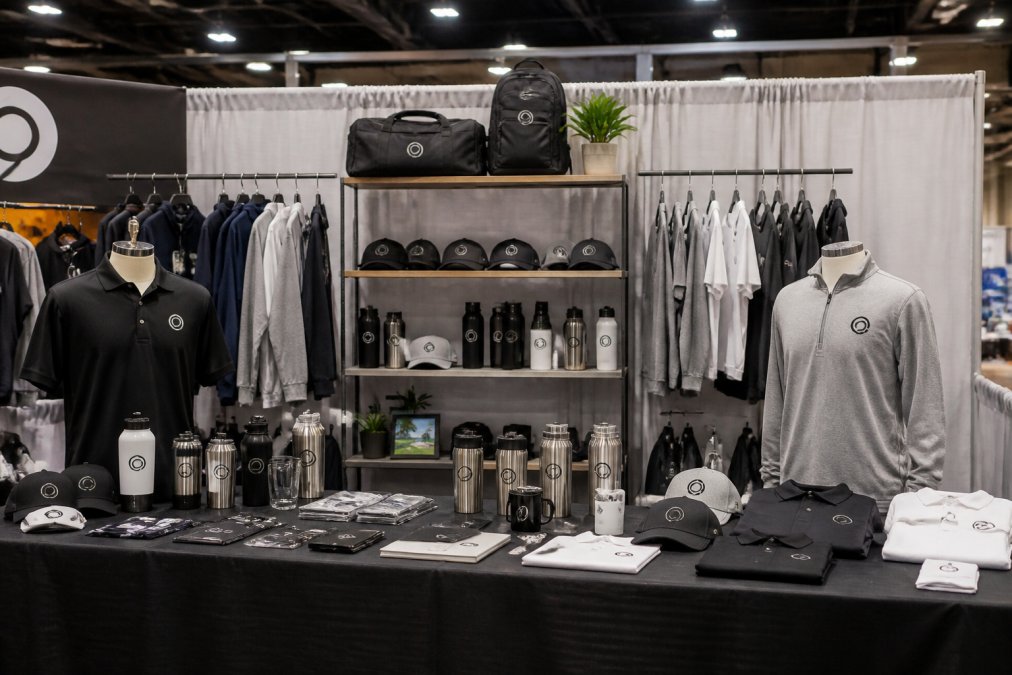
T-shirts and apparel work if your booth has space to display size options, though sizing errors waste budget on unused items.
Drinkware performs exceptionally well at trade shows. A branded water bottle or tumbler takes minimal booth space, fits in a bag, and has immediate utility. People use these items daily, creating extended brand exposure long after the event.
Tech accessories like phone stands or cable organizers appeal to professionals and feel more premium than basic giveaways.
Branded notepads or journals work for professional events where attendees take notes.
Choose items that people will actually use after the event ends. The best trade show items sit on someone’s desk or in their bag for months afterward.
Promotional Product Turnaround Time: What to Expect
Turnaround time varies dramatically based on production method, product, and order size.
Standard production typically takes 7-14 business days for most items. Screen-printed apparel often falls in the 10-14 day range. Direct-to-garment printing might be 7-10 days. Embroidery can stretch toward 14-21 days depending on complexity.
Rush production compresses these timelines but costs more. Many vendors offer 3-5 day rush options, though not all products support this. A rush t-shirt order might cost 30-50% more than standard production.
Bulk orders take longer, not shorter, because production scheduling and logistics are more complex.
Seasonal peaks matter. During Q4 (September through November), standard 10-day turnaround might stretch to 15-20 days. Plan campaigns with adequate lead time to save money and stress.
Customization and Imprint Methods Explained
The imprint method you choose determines how your design appears on the finished product. Each method has different capabilities, costs, and durability profiles.
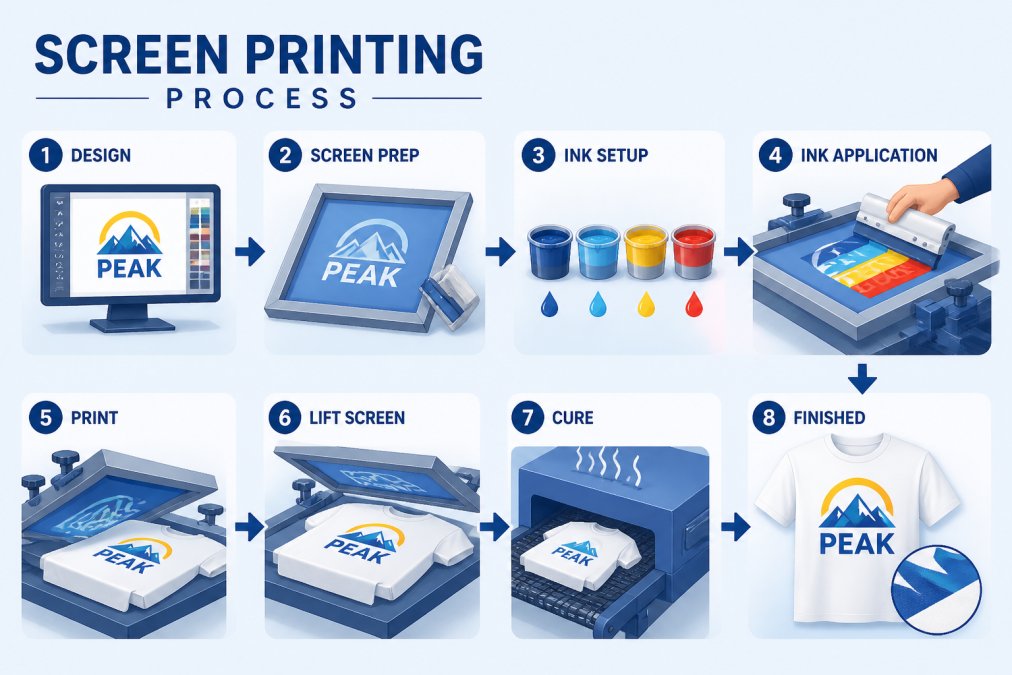
Screen Printing
Screen printing is the traditional method and most cost-effective for large orders. The process involves creating a mesh screen for each color in your design, then pressing ink through the screen onto the fabric.
When it works best: Simple designs with 1-4 colors, orders of 100+ units, and budget-conscious campaigns. Screen printing delivers vibrant, durable color that lasts through hundreds of washes.
The limitation: Setup costs are fixed regardless of order size. Printing a 50-unit order costs almost as much in setup as printing a 500-unit order, making screen printing cost-effective only at larger volumes.
Durability: Excellent. Screen-printed designs hold up through regular washing and wear because the ink bonds with the fabric.
Embroidery
Embroidery involves stitching your design directly into the fabric using specialized machines. The result looks premium and professional, which is why it’s popular for corporate uniforms.
When it works best: Professional apparel like polos and jackets, corporate uniforms, and items where durability and premium appearance matter.
The limitation: Complex designs with fine details don’t translate well to embroidery. Thin lines blur, small text becomes illegible. Embroidery works best for simpler logos with bold shapes.
Durability: Superior. Embroidered designs won’t fade or crack because they’re stitched into the fabric itself.
Cost: Higher per unit than screen printing, but setup costs are lower, making embroidery viable for smaller orders.
Digital Direct-to-Garment (DTG) and Direct-to-Film (DTF)
DTG and DTF print designs directly onto fabric using inkjet-style printing. DTG prints directly onto the garment. DTF prints onto a film that’s then transferred to the garment.
When it works best: Complex, multi-color designs with fine details, photorealistic images, and small to medium orders where you want unlimited colors without setup fees.
The limitation: Per-unit cost is higher than screen printing for large orders. If you’re ordering 1,000 identical t-shirts, screen printing is cheaper. If you’re ordering 50 t-shirts with intricate artwork, DTG/DTF wins.
Durability: Good, but slightly less durable than screen printing. Designs can crack if the garment is folded aggressively or washed in hot water repeatedly.
Color accuracy: Excellent. Digital color mixing matches your design file more accurately than screen printing.
Laser Engraving and Pad Printing
Laser engraving works on materials like wood, metal, and hard plastics. A laser burns away the surface to reveal the material beneath. Pad printing uses a silicone pad to transfer ink onto curved or irregular surfaces.
When it works best: Non-fabric items like drinkware, pens, leather goods, and tech accessories. Laser engraving creates a premium look on quality items.
Durability: Laser engraving is permanent. Pad printing is durable but can eventually wear with heavy use.
Cost: Laser engraving setup is minimal, making it viable for small orders.
Bulk Savings and Volume Discounts
Volume discounts are real but not linear. A vendor might charge $12 per shirt for 50 units, $9 per shirt for 100 units, and $6 per shirt for 250 units. Understanding the discount structure for your specific product helps you make smart purchasing decisions.
Setup fees impact small orders disproportionately. A $50 setup fee on a 25-unit order adds $2 per unit. The same fee on a 500-unit order adds $0.10 per unit.
Seasonal pricing varies. Off-season orders might qualify for better discounts than peak-season orders.
Don’t just look at per-unit cost. Calculate total cost, consider your actual needs, and factor in storage and shelf life when deciding how much to order.
Quality That Lasts: Durability and Print Longevity
The difference between promotional items that get used and items that get discarded often comes down to quality. A cheap t-shirt that falls apart after three washes creates negative brand associations. A quality garment that holds up for a year creates positive ones.
Fabric quality affects durability. Higher thread count cotton feels better and lasts longer than low-quality cotton. Blended fabrics often outlast 100% cotton in color retention and shape stability.
Ink quality determines how long prints stay vibrant. Professional screen printing inks withstand hundreds of washes. Cheap inks fade faster and can crack with wear.
Testing and standards matter. Reputable vendors test their products to ensure durability. When you order from Action Designs, you’re getting items designed to last.
Ordering custom promotional items online doesn’t have to be complicated. The key is making intentional decisions at each step, choosing the right product, selecting the appropriate imprint method, and building in time for proper review. When you approach the process strategically, you end up with promotional items that actually work for your business.
Ready to get started? Get a quote from Action Designs and let our team help you navigate product selection, imprint methods, and turnaround timelines for your specific campaign. We work with businesses of all sizes, from small teams ordering 25 items to enterprises managing thousands of units.
Frequently Asked Questions
What websites let me order custom promotional items with no minimum order?
Several platforms offer no-minimum or low-minimum promotional products. Vistaprint, Custom Ink, and RushOrderTees allow single-item orders on many products, while others offer promotional products under specific minimums like 12-25 units. Action Designs provides scalable production from single shirts to full collections, making it possible to start small regardless of your order size. Check each platform's product pages for specific minimums, as they vary by item type.
How long does promotional product turnaround time typically take?
Standard promotional product turnaround time ranges from 5-10 business days for most orders, depending on the imprint method and complexity. Rush options are available from providers like RushOrderTees and Deluxe, offering 24-hour or 2-3 day delivery for an additional fee. Setup time for your design proof and approval typically adds 1-2 business days. For trade shows or urgent events, confirm rush availability when placing your order to ensure your merchandise arrives on schedule.
What are the best promotional items for trade shows?
Top trade show promotional items include branded apparel (t-shirts, hoodies), drinkware (mugs, can coolers), pens, drawstring bags, and luggage tags. These items offer high visibility, practical value to attendees, and strong brand recall. Apparel works especially well for larger quantities and creates walking advertisements. Drinkware and pens suit budget-conscious campaigns. Choose items based on your target audience, booth space, and budget. Action Designs can customize any of these with screen printing, embroidery, or DTG methods to match your brand identity.
How do I prevent color matching issues with my branded merchandise?
Request a digital mockup or physical sample before full production. Most providers, including Action Designs, offer design proofs showing exactly how your logo and colors will appear on the final product. Provide your logo in vector artwork format for the most accurate color reproduction. Discuss color matching expectations upfront, especially for critical brand colors. For apparel, some providers offer sample kits so you can approve the garment color and print quality before committing to your full order.
This article was written using GrandRanker